Board Feet vs Linear Feet: Key Differences
Board feet and linear feet measure different things. Learn which unit to use for your lumber project and how to convert between them.
The Short Answer
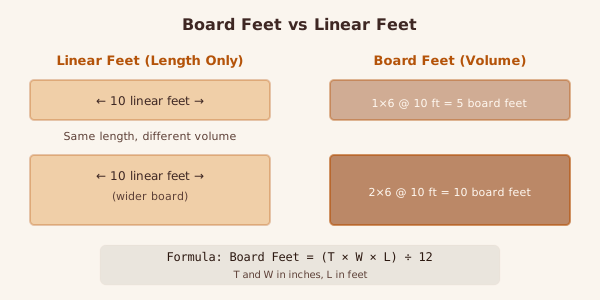
Board feet measure the volume of a piece of lumber. Linear feet measure only its length. They are not interchangeable, and mixing them up is one of the most common mistakes people make when ordering wood.
A 2×6 board at 10 feet contains 10 linear feet. It also contains 10 board feet. But a 1×6 at 10 feet also contains 10 linear feet, while containing only 5 board feet. Same length, half the wood volume. That difference matters when you're budgeting a project.
What Is a Board Foot?
A board foot is a unit of lumber volume equal to a piece 1 inch thick, 12 inches wide, and 12 inches long (or any combination that gives you the same volume. that gives you the same volume). Think of it as a 12×12×1 block of wood.
The formula is simple: Board Feet = (Thickness × Width × Length) ÷ 12. Thickness and width are measured in inches; length is in feet.
Here's how it works for common sizes: a 2×4 at 8 feet comes out to (2 × 4 × 8) ÷ 12 = 5.33 board feet using nominal dimensions. A 2×6 at 8 feet gives you (2 × 6 × 8) ÷ 12 = 8 board feet. Same length, but the wider board contains more wood, and costs more.
Hardwood dealers, sawmills, and premium lumber suppliers price by the board foot because it reflects the actual amount of wood you're buying. When you pay $9 per board foot for oak, you're paying for the volume, not the length.
What Is a Linear Foot?
A linear foot is exactly what it sounds like: one foot of length, regardless of the board's thickness or width. It ignores volume entirely.
Linear footage is useful when you need to know how many feet of material to cover a distance. Installing 24 feet of baseboard trim? You need 24 linear feet of molding. Framing a 20-foot wall with studs on 16-inch centers? You need to calculate how many studs fit in 20 linear feet of wall.
Hardware stores and home centers often price common lumber sizes like 2×4s and 2×6s by the linear foot or by the piece at a given length. You'll see a sign that says "2×4×8 for $5.49 per piece," which translates to about $0.69 per linear foot. But lumber yards that sell hardwoods or specialty wood list prices per board foot.
When to Use Each Unit
Use linear feet when you're measuring span and coverage: how long a shelf run is, how many feet of fence you need, how far a joist needs to span. These calculations don't care about how thick or wide the board is, only how long.
Use board feet when you're ordering by volume and pricing by material content. Any time you buy from a hardwood dealer, price a custom milling job, or calculate the yield from a log, you're working in board feet.
The confusion happens when you shop at a home center (which prices by piece or linear foot) and then try to compare with a hardwood dealer who quotes per board foot. They're measuring different things.
How to Convert Between Them
Going from linear feet to board feet: multiply linear feet by thickness and width in inches, then divide by 12.
Board Feet = Linear Feet × (Thickness in inches × Width in inches) ÷ 12
Example: you have 50 linear feet of 2×6 pine. That's 50 × (2 × 6) ÷ 12 = 50 board feet.
Going the other direction: if you know you need 50 board feet of 2×6, divide by the board-foot yield per linear foot: 50 ÷ (2 × 6 ÷ 12) = 50 ÷ 1 = 50 linear feet. Easy with 2×6 since each linear foot = 1 board foot. For a 2×4, each linear foot = 0.67 board feet, so 50 board feet ÷ 0.67 = about 75 linear feet.
Our free board feet calculator handles this automatically; enter your lumber size, length, and quantity to see both measurements side by side.
Practical Examples
Deck project: you're building a 12×16 foot deck with 2×6 decking on 12-inch centers. You need 16 boards at 12 feet each. That's 16 × 12 = 192 linear feet. In board feet: 16 × (2 × 6 × 12) ÷ 12 = 192 board feet. For a 2×6, linear feet and board feet happen to be the same number. That's not always the case.
Furniture project: you're building a dining table that needs 40 board feet of oak. Your hardwood dealer sells oak at $9.00 per board foot. That's $360 in rough stock, before surfacing or waste. But if you ask for the wood in "linear feet" without specifying thickness and width, the quote is meaningless until you define the dimension.
Baseboard trim: you need 80 linear feet of 3½-inch baseboard molding. Baseboard is typically sold by the linear foot because it's a profile shape, not dimensional lumber. The board-foot concept doesn't apply to molding profiles; just buy the linear footage you need plus 10% for waste.
The Nominal vs Actual Wrinkle
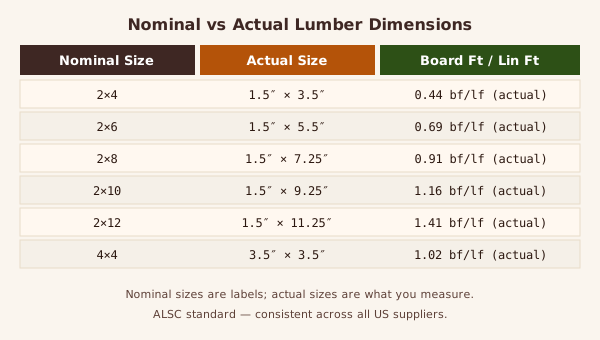
Here's an extra layer: board feet are often calculated using nominal dimensions (the listed 2×4), not actual dimensions (the real 1.5×3.5). Suppliers typically quote by nominal board footage. So when you buy 50 board feet of 2×4 framing lumber, you're actually getting slightly less wood by actual volume.
This matters most for hardwoods, where you're paying a premium per board foot. A 4/4 (one-inch nominal) board at a hardwood dealer actually measures about 13/16-inch thick after surfacing. If you're calculating yields for a project, use actual dimensions. If you're pricing a lumber order, use nominal.
The free lumber estimator lets you toggle between nominal and actual dimensions, so you can match whichever spec your plans call for.
Summary
Board feet = volume (thickness × width × length ÷ 12). Linear feet = length only. Softwood framing lumber at retail is usually priced by the linear foot or per piece. Hardwoods are priced by the board foot. For any project, identify which unit your supplier uses before you place an order, then use the right calculator to convert to whichever unit your plans specify.
When in doubt, ask your supplier: "Do you price by the board foot or by the piece?" Their answer tells you which unit to use for your estimate.
Bench · Try the calculator
Lumber Calculator
Professional lumber calculator for woodworkers, contractors, and DIY enthusiasts. Calculate board feet, linear feet, and project costs.
Open calculator →